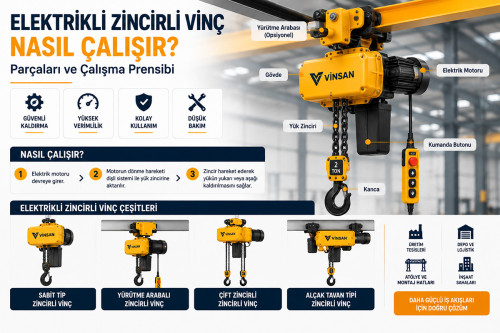
What Is a Scissor Lift Table (Scissor Lift Platform) and How Do You Choose the Right One?

What Is a Scissor Lift Table (Scissor Lift Platform) and How Do You Choose the Right One?

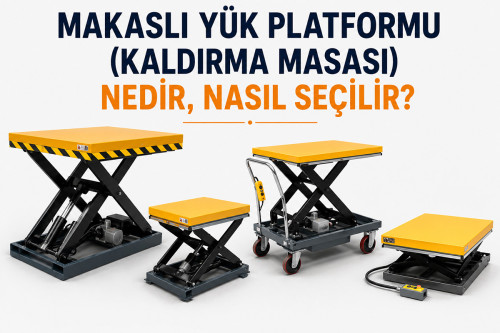
A scissor lift table is an industrial lifting device that raises and lowers loads vertically using hydraulic power to extend and retract a set of scissor-shaped (X-frame) cross arms. Also commonly referred to as a lift table or scissor lift platform, this equipment is widely used at loading and unloading stations, production line feeding points, and workstations where ergonomic working heights are required. Choosing the right scissor lift table involves evaluating several key technical factors, including lifting capacity, lowered and raised height, platform dimensions, and power source. In this article, we explain what a scissor lift table is, how it works, its main types and applications, and the essential selection criteria to consider before purchasing one from an expert perspective.

Read more
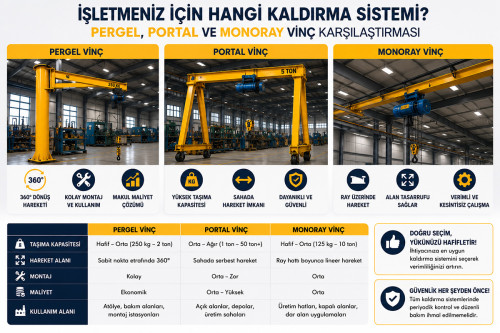
Which Lifting System Is Right for Your Business? A Comparison of Jib, Gantry, and Monorail Cranes

Which Lifting System Is Right for Your Business? A Comparison of Jib, Gantry, and Monorail Cranes

Choosing the right lifting system for your business is a critical decision that directly impacts operational efficiency, workplace safety, and long-term investment costs. Jib cranes, gantry cranes, and monorail cranes are three of the most widely used industrial lifting solutions, each designed with a different operating geometry, installation method, and application. Do you need to handle loads within a circular workstation, require a flexible system that can be relocated to different areas, or transport materials along a fixed production line? In this article, we compare jib, gantry, and monorail crane systems based on their technical features, advantages, typical applications, and selection criteria, providing a practical guide to help you determine which lifting solution best fits your business needs.

Read more
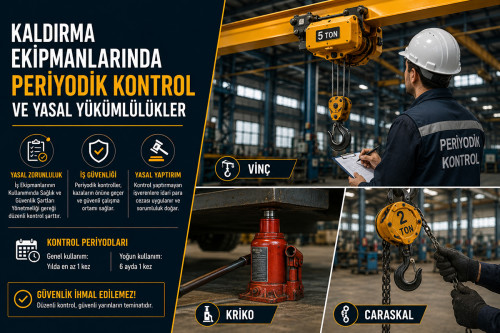
Periodic Inspection and Legal Requirements for Lifting Equipment (Cranes, Jacks, and Chain Hoists)

Periodic Inspection and Legal Requirements for Lifting Equipment (Cranes, Jacks, and Chain Hoists)

Periodic inspection of lifting equipment is a legally mandated inspection process that verifies the safe operation of lifting devices such as cranes, jacks, and chain hoists. In Türkiye, this obligation is regulated under the Regulation on Health and Safety Conditions in the Use of Work Equipment, issued pursuant to Occupational Health and Safety Law No. 6331. According to the regulation, employers are responsible for ensuring that lifting and conveying equipment undergoes periodic inspections at the prescribed intervals by authorized and competent personnel. Failure to inspect cranes, jacks, or chain hoists not only significantly increases the risk of serious workplace accidents but may also expose employers to administrative penalties and legal liabilities. In this article, we examine what periodic inspection of lifting equipment involves, its legal basis, which types of equipment are covered, who is authorized to perform these inspections, and the most common compliance mistakes from an expert perspective.

Read more
Chain Hoist vs. Wire Rope Hoist: What Are the Differences and Which One Should You Choose?

Chain Hoist vs. Wire Rope Hoist: What Are the Differences and Which One Should You Choose?

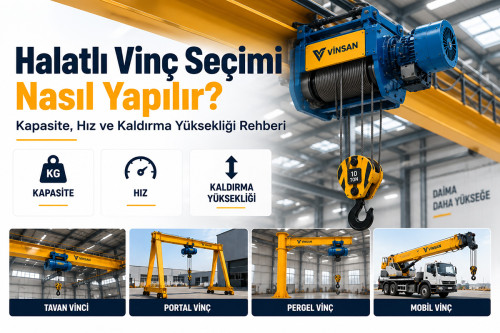
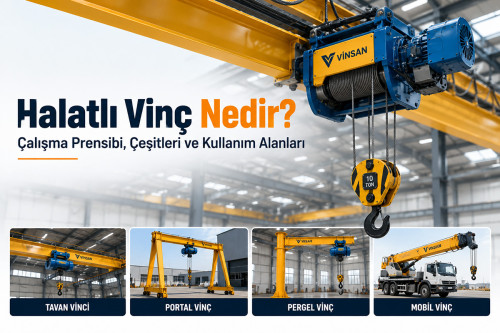
Chain hoists and wire rope hoists are the two most common categories of industrial lifting equipment, and choosing the right one directly impacts both workplace safety and operational efficiency. While both are designed to lift loads vertically, a chain hoist uses a calibrated steel chain and gear mechanism, whereas a wire rope hoist operates with a steel wire rope wound around a drum system. This fundamental difference influences several critical factors, including lifting height, lifting speed, load capacity, overall dimensions, and maintenance requirements. In this guide, we compare the technical differences, applications, advantages, selection criteria, and common operational mistakes associated with chain hoists and wire rope hoists, providing a practical answer to the question: “Which one should I choose?”

Read more
What Is a Mobile Gantry Crane (Portable Gantry Crane) and How Is It Used?

What Is a Mobile Gantry Crane (Portable Gantry Crane) and How Is It Used?

A mobile gantry crane is a load-lifting system that operates without being permanently mounted to a fixed structure. Thanks to its wheeled design, it can be easily moved between different work areas. Also known as a portable gantry crane, this equipment consists of two vertical legs, a horizontal beam connecting the legs, and a hoist suspended from the beam. Since it does not place any load on building roofs or columns, it can be positioned, locked, and operated wherever needed within a workshop or facility. As a result, a mobile gantry crane offers both a cost-effective and highly flexible lifting solution. In this article, we take a technical look at how portable gantry cranes work, their applications, key advantages, selection criteria, and the most common operational mistakes encountered in the field.

Read more
What Is a Hydraulic Machine Jack and How Does It Work?

What Is a Hydraulic Machine Jack and How Does It Work?

A hydraulic machine jack is an industrial lifting device designed to safely raise heavy machinery and high-capacity loads with minimal physical effort. Operating according to Pascal’s Principle, hydraulic machine jacks are widely used for lifting, positioning, leveling, and relocating heavy equipment such as industrial presses, generators, molds, reducers, and production-line machinery.

Unlike conventional jacks, a hydraulic machine jack often features a toe-lift design, allowing loads to be lifted either from the top saddle or from a low-clearance toe positioned near ground level. This unique capability makes hydraulic machine jacks essential tools for machinery installation, maintenance, and relocation operations.

Read more

Phone

0 506 458 5006

E-mail

[email protected]

Address

Tuzla