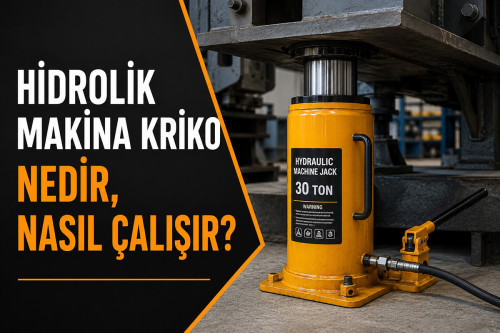
What Is a Hydraulic Machine Jack and How Does It Work?
A hydraulic machine jack is an industrial lifting device designed to safely raise heavy machinery and high-capacity loads with minimal physical effort. Operating according to Pascal’s Principle, hydraulic machine jacks are widely used for lifting, positioning, leveling, and relocating heavy equipment such as industrial presses, generators, molds, reducers, and production-line machinery.
Unlike conventional jacks, a hydraulic machine jack often features a toe-lift design, allowing loads to be lifted either from the top saddle or from a low-clearance toe positioned near ground level. This unique capability makes hydraulic machine jacks essential tools for machinery installation, maintenance, and relocation operations.
What Is a Hydraulic Machine Jack?
A hydraulic machine jack is a mechanical-hydraulic lifting system that uses pressurized hydraulic oil to generate a powerful lifting force. By applying a small force to a pump piston, hydraulic pressure is created and transferred to a larger lifting piston. Because the lifting piston has a greater surface area, the system multiplies the input force, enabling a single operator to lift loads ranging from several tons to dozens of tons.
In industrial environments, hydraulic machine jacks are not primarily used for lifting vehicles. Instead, they are designed for moving, leveling, positioning, and supporting heavy machinery in manufacturing plants, power stations, steel mills, shipyards, and construction projects.
How Does a Hydraulic Machine Jack Work?
The operating principle of a hydraulic machine jack is based on Pascal’s Law, which states that pressure applied to an enclosed incompressible fluid is transmitted equally throughout the fluid.
Step-by-Step Operation
1. Pumping Action
When the operator moves the handle, a small pump piston draws hydraulic oil from the reservoir and forces it into the hydraulic system.
2. Pressure Transfer
A one-way check valve prevents the oil from flowing backward. With each pump stroke, hydraulic pressure increases and is directed toward the lifting cylinder.
3. Lifting the Load
The pressurized oil pushes a larger lifting piston upward. Since the lifting piston has a significantly larger surface area than the pump piston, a substantial force multiplication occurs.
4. Lowering the Load
When the release valve is gradually opened, hydraulic oil returns to the reservoir, allowing the load to descend in a controlled and safe manner.
Why Is the Toe-Lift Design Important?
Most industrial machine jacks feature a toe-lift mechanism. The lifting toe is positioned close to the ground, enabling operators to lift machinery with extremely low ground clearance.
This feature is particularly useful when handling heavy equipment that sits directly on the floor, such as CNC machines, industrial presses, transformers, and generators. Once the load has been raised slightly, the top saddle can be used to achieve additional lifting height.
Common Applications of Hydraulic Machine Jacks
Hydraulic machine jacks are widely used in industries where heavy equipment must be installed, relocated, or maintained.
Typical Applications Include:
- Machinery manufacturing and installation facilities
- Power plants and energy production sites
- Steel mills and foundries
- Shipbuilding and railway maintenance operations
- Construction and prefabrication industries
- Heavy equipment relocation projects
- Industrial maintenance and repair operations
These jacks are commonly used for positioning CNC machines, injection molding equipment, generators, turbines, transformers, molds, and other heavy industrial components.
Advantages of Hydraulic Machine Jacks
Hydraulic machine jacks offer several advantages compared to mechanical screw jacks and alternative lifting methods.
High Lifting Capacity
Large loads can be lifted with minimal operator effort.
Low-Clearance Lifting
The toe-lift design allows lifting from extremely low starting heights.
Precise and Controlled Movement
Hydraulic systems enable smooth lifting and lowering operations, making equipment positioning more accurate.
Compact Design
Their compact structure allows use in confined industrial spaces.
Durability
Heavy-duty steel construction ensures long service life under demanding conditions.
Improved Safety
Controlled lowering reduces the risk of sudden load movement during maintenance or installation work.
Safety Considerations When Using a Hydraulic Machine Jack
To ensure safe operation, operators should follow these guidelines:
- Never exceed the rated lifting capacity.
- Always place the jack on a solid and level surface.
- Position the jack as close as possible to the load’s center of gravity.
- Use support blocks or jack stands after lifting.
- Regularly inspect hydraulic oil levels and seals.
- Wear appropriate personal protective equipment (PPE), including safety shoes and gloves.
- Never work under a load supported solely by a hydraulic jack.
Common Mistakes to Avoid
Overloading the Jack
Exceeding the rated capacity can damage internal components and create serious safety hazards.
Leaving Loads Supported Only by the Jack
Hydraulic systems can slowly lose pressure over time. Always use additional supports.
Operating on Uneven Ground
Unstable surfaces increase the risk of tipping or load shifting.
Using Incorrect Hydraulic Oil
Improper hydraulic fluid can damage valves and reduce performance.
Neglecting Maintenance
Lack of maintenance may cause air intrusion, oil leaks, and reduced lifting efficiency.
Opening the Release Valve Too Quickly
Rapid lowering can cause sudden load movement and equipment damage.
What Should You Do If the Jack Will Not Lift?
If a hydraulic machine jack fails to lift a load:
- Check for trapped air in the hydraulic system.
- Bleed the system according to the manufacturer’s instructions.
- Verify that the hydraulic oil level is sufficient.
- Inspect valves for contamination or blockage.
- Check seals and gaskets for wear or leakage.
- Contact an authorized service provider if the issue persists.
How to Choose the Right Hydraulic Machine Jack
Selecting the correct hydraulic machine jack depends on several factors.
Lifting Capacity
Choose a model with a capacity higher than the maximum load weight to provide a safety margin.
Lifting Height
Ensure the jack offers sufficient stroke length for the intended application.
Toe-Lift or Top-Lift Requirement
Consider the load’s ground clearance and accessibility.
Standard or Long-Type Design
Long-body models provide greater lifting heights and are suitable for specialized applications.
Build Quality
Look for robust steel construction and high-quality sealing components.
Service and Spare Parts Availability
Select equipment from manufacturers that offer technical support and replacement parts.
Conclusion
A hydraulic machine jack is an essential industrial lifting solution that uses hydraulic pressure and Pascal’s Law to generate significant lifting force with minimal effort. Its toe-lift design, high load capacity, precise control, and durability make it indispensable for machinery installation, maintenance, and relocation projects.
Choosing the correct capacity, operating on stable surfaces, using proper safety supports, and performing regular maintenance are key factors in ensuring safe and efficient operation. When selected and used correctly, a hydraulic machine jack provides a reliable, long-lasting, and highly effective lifting solution for demanding industrial environments.
Content is being edited
Comments